

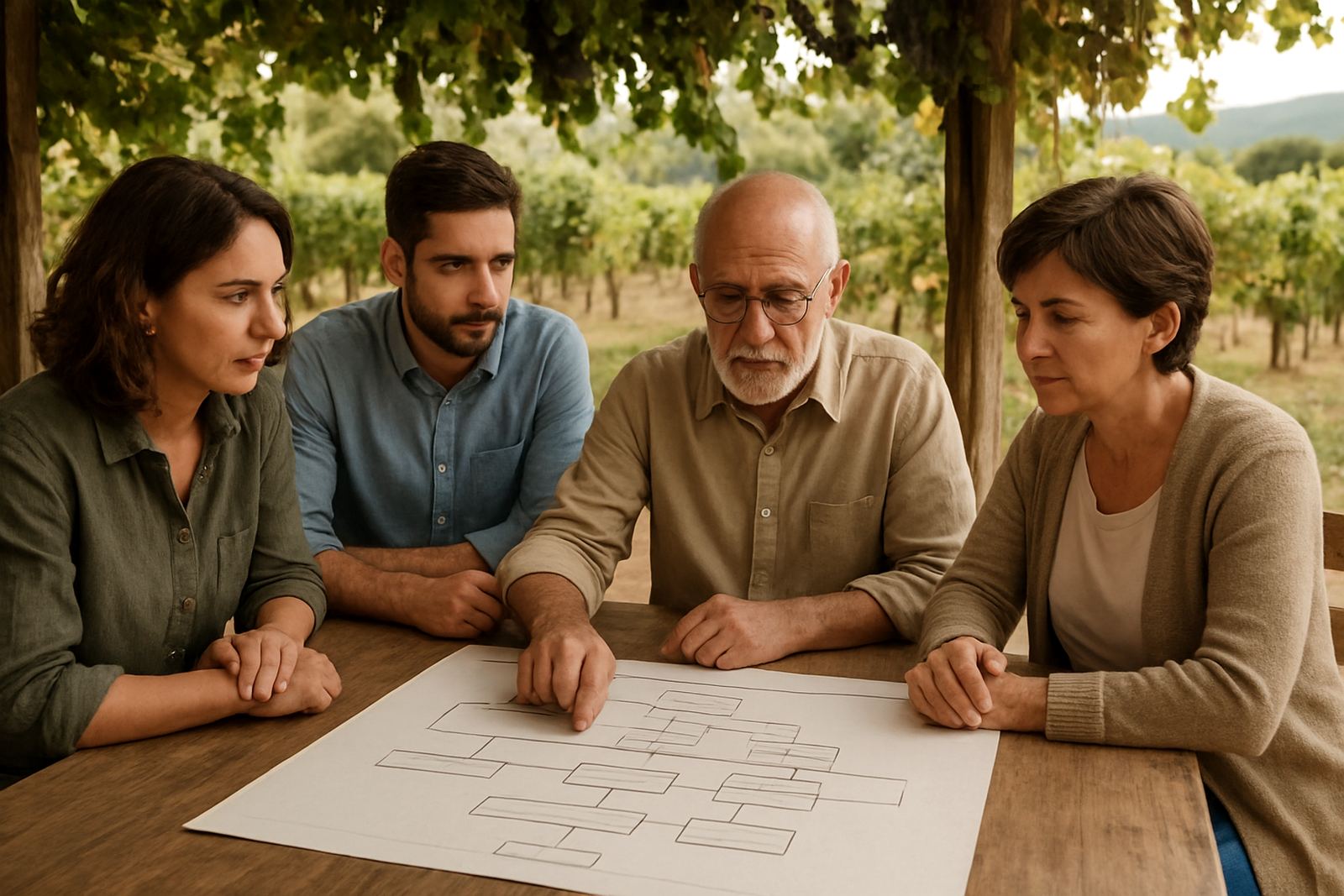
The brief from a Stellenbosch founder family
The clients were a founder-led family group based in Stellenbosch, with business interests and personal assets spread across the Western Cape and Gauteng. Their concern was not only wealth creation, but how to pass it on properly. They wanted the business owner’s retirement income planned, the estate documents aligned, and the trust structure checked before any change in control took place.
The brief was straightforward to state and more involved to carry out. The family needed a plan that would work in real life, not just on paper, and it had to suit an adult family where some members were active in the business and others were not. They also wanted to avoid rushed decisions, especially where liquidity, tax timing and trusteeship could create tension later.
Constraints that shaped the work
The biggest constraint was time. The founder was still active, but wanted to step back in stages over the next 18 months. That meant retirement income, dividend flow and handover duties all had to be considered together. There was also a seasonal pressure point: year-end planning, trust meetings and family availability did not always line up, and one branch family member was travelling between Cape Town and Johannesburg regularly.
There were practical estate constraints too. The family held both operating assets and investment assets, some in personal name and some in trust. Not all beneficiary nominations had been reviewed for years, and a few documents had become outdated after earlier restructures. Because several assets were tied to business continuity, we had to check what would happen if death, incapacity or a delayed handover interrupted cashflow. In South Africa, that is where many good plans fray, so we spent time on the details.
What we supplied and mapped out
We started with a full asset map, then moved into estate planning and succession conversations. This included wills, trust deed alignment, retirement income planning and a review of how liquidity would be created if the estate needed cash quickly. We also facilitated family meetings so the founder could speak openly about intent, control and timing without the discussion turning into conflict.
- Asset mapping across business, property and investment holdings
- Will coordination and beneficiary review
- Trust structuring checks and trustee briefing notes
- Retirement income scenario planning for staged withdrawal
- Succession facilitation with family meeting notes
- Liquidity analysis for estate duty and administration costs
The work was handled in plain language. We avoided jargon where possible and used examples the family could compare side by side, such as what happens if income is drawn from investments versus retained in the operating structure. That made the decisions easier to test before anything was signed.
How the project ran week by week
The assignment ran over 8 weeks in total. Week 1 was intake and document collection. Weeks 2 and 3 were fact-finding, asset mapping and a review of existing wills and trust records. By week 4 we had a first draft of the succession options and retirement income models. Weeks 5 and 6 were used for family meetings, trustee briefings and revisions after questions from the business and personal sides of the family.
In week 7 we completed the final plan pack, including action items for the legal and administrative work that still needed to follow. Week 8 was the sign-off meeting, where we confirmed next steps and the review calendar. The family appreciated that the process did not stretch on forever. They knew what was done, what remained outstanding and who was responsible for each part.
- Duration: 8 weeks from intake to sign-off
- Format: in-person in Stellenbosch with video consultations where needed
- Coverage: Stellenbosch, Cape Town and Johannesburg family members
- Delivery style: one lead plan with clear action points
Results the family could act on
By the end of the project the founder family had a practical succession framework, updated estate priorities and a clearer view of how retirement income would be funded during the handover period. The trust structure was easier to understand and the family had a better grip on who should be involved in decisions, and when. That reduced the amount of uncertainty around both control and cashflow.
The main result was calm. There was less guesswork about what happens if the founder steps back sooner than planned, and less risk of family disagreement over assets that were never meant to be inherited in the same way. The plan also gave the business a cleaner path forward, because the handover points were separated from emotional assumptions. For a founder family, that is often the difference between a smooth transfer and a messy one.
It also helped that the work was grounded in South African realities. Family meetings were scheduled around school terms, travel, and load-shedding where needed, with documents shared early so no one arrived unprepared. Small details like that matter when several households are involved.
What we would do again for a similar family
We would repeat the same order of work: map first, then talk, then draft. Starting with the full picture means the family sees where the risks are before opinions harden. We would also keep the retirement income discussion inside the succession work rather than treating it as a separate exercise, because the founder’s cashflow and the future ownership structure are linked.
For another founder family, we would again recommend early beneficiary reviews, trustee briefings and at least one family meeting with everyone who is materially affected. It is easier to adjust a trust or will while the founder is active than after a crisis. In this case, the early work gave the family options. That is what they wanted most, even if they did not say it that way at first.
If there is one practical lesson from the project, it is this: succession goes better when the plan is built while the founder is still able to explain the why behind each decision.
Key facts
| Client type | Founder family business with multi-generational planning needs |
|---|---|
| Town | Stellenbosch |
| Project focus | Business succession, retirement income planning and trust structures |
| Timeline | 8 weeks |
| Service mix | Estate Planning, Will Coordination, Trust Structuring, Succession Facilitation, Plan Reviews |
| Delivery | In-person in Stellenbosch and video consultations nationwide |