

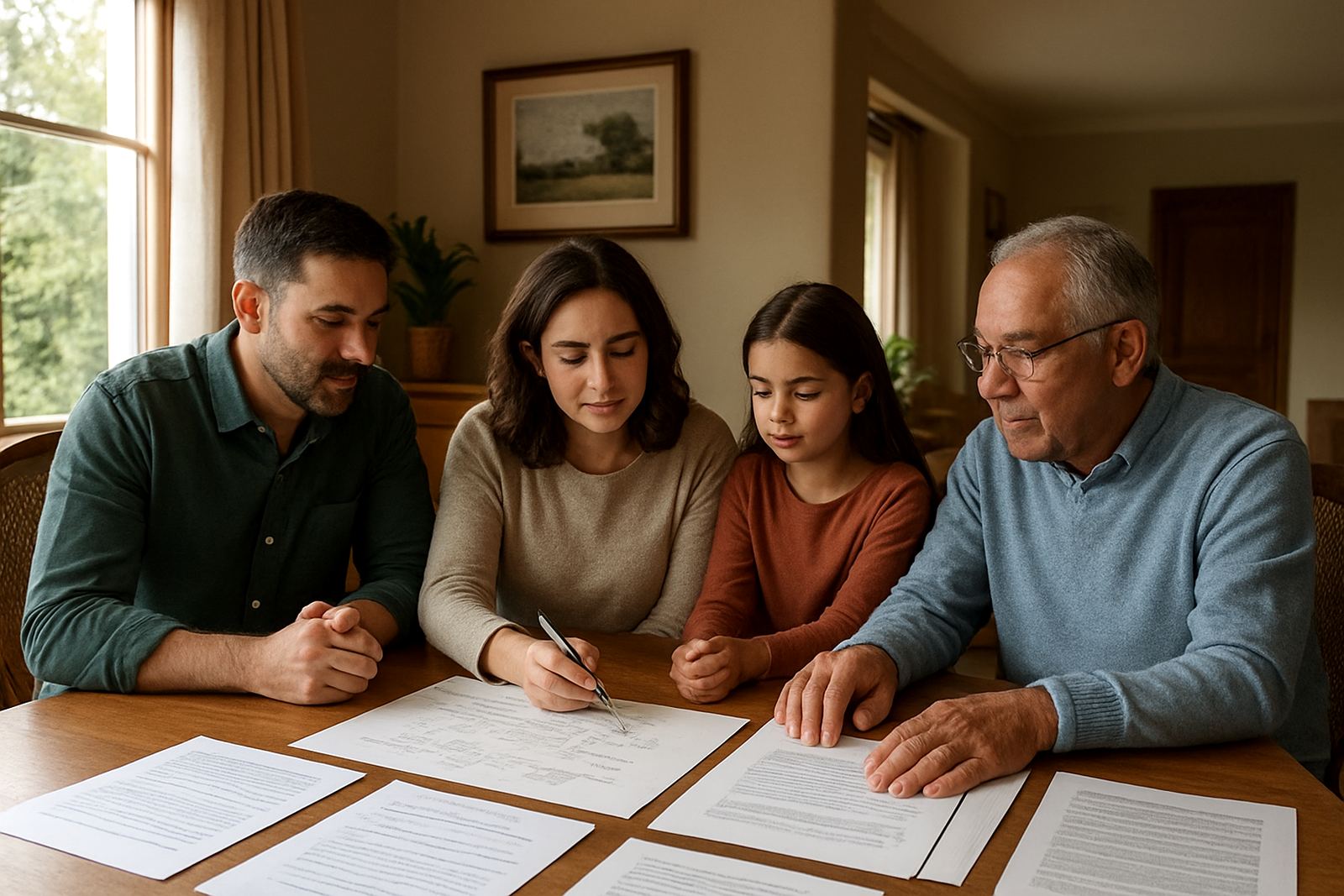
The family picture in Claremont
The client was a married couple in Claremont with children from previous relationships, one adult child still financially dependent, and two households that both needed to feel considered. They were not looking for product recommendations or a quick signature exercise. They wanted a clear structure for who would receive what, when that would happen, and how the surviving spouse would be supported without upsetting the wider family balance.
The estate was fairly typical of a Cape Town family with a mix of assets: a home, retirement benefits, unit trust investments, a small private business interest and some offshore exposure. There were also long standing assumptions in the family that had never been written down. That is where blended family planning gets tricky. If you leave things vague, the law and the paperwork can do more talking than the people involved.
- Client type: married blended family with adult and dependent children
- Location: Claremont, with family connections in Cape Town and Paarl
- Planning need: fairness, spouse support and inheritance sequencing
- Main concern: avoid disputes between households after the first death
Brief, constraints and what had to be protected
The brief was simple to say and difficult to solve: provide for the surviving spouse, treat the children fairly, and make sure the estate did not become cash poor at the wrong time. The couple also wanted their plan to work in real life, not only on paper. That meant dealing with liquidity, beneficiary nominations, trustee roles and the order in which assets would move.
There were a few constraints. One spouse had a business interest that could not be split without affecting trading continuity. Another asset carried sentimental weight, which is often where family tension starts. We also had to respect the fact that the children were at different life stages, so equal treatment was not the same as identical treatment. A fair outcome needed clear reasoning behind it, not just a neat formula.
- Need for spouse housing and income support after first death
- Protection of business continuity and decision making authority
- Separate treatment of sentimental assets and liquid assets
- Alignment between the will, beneficiary forms and trust structure
What we supplied over six weeks
We worked through the matter over six weeks, starting with a full asset map and family meeting. That first step matters because people often know the big pieces but miss the small ones, and those small ones can change the outcome. We then ran a liquidity analysis to test whether the estate could meet taxes, costs and family needs without forcing a rushed sale.
From there, we prepared a coordinated plan that included will coordination, trust structuring guidance and a retirement income review. We also facilitated a succession conversation with the adult children so the parents could explain the intent behind the structure while they were both present. It is better to have one careful family meeting than three anxious phone calls later.
- Week 1: document collection and asset mapping
- Week 2: family meeting and goals clarification
- Week 3: liquidity analysis and inheritance sequencing options
- Week 4: trust and beneficiary alignment
- Week 5: draft review and trustee briefing notes
- Week 6: final plan review and implementation checklist
How fairness was structured across two households
The main challenge was not choosing favourites, it was setting a rule that could hold up under pressure. We helped the family separate three questions: what must go to the surviving spouse, what should stay protected for the children, and what needs to be held back until a later stage. That allowed them to make decisions based on purpose rather than emotion in the moment.
We also reviewed how the trust would be used if one spouse died first. The aim was not to move everything into a trust, but to use the right tool for the right job. In this case, the trust helped protect long term assets and support continuity, while the will dealt with immediate instructions and distribution. The result was a cleaner sequence, with fewer gaps for conflict to creep in. The family appreciated that the reasoning was explained in plain language, not legal jargon.
- Spouse support was ring-fenced before final distributions
- Children’s inheritances were sequenced, not rushed
- Business continuity was protected through clear authority lines
- Trust use was limited to the assets that needed long term control
Beneficiary reviews, trustee briefings and family clarity
Once the structure was agreed, we checked the beneficiary nominations on the retirement and investment side so they matched the wider plan. That step is often missed, especially when accounts were opened years apart. We then prepared trustee briefing notes so the family knew who would do what, what powers existed, and where approvals would be required.
We also covered practical matters that families tend to ignore until it is too late: where records are kept, who knows the adviser contact details, and how the surviving spouse would access cash in the first 30 to 90 days. Those details sound small, but they make a big difference when people are under pressure. A good estate plan should reduce admin, not create more of it.
- Beneficiary review across retirement and investment holdings
- Trustee briefing for role clarity and decision making
- File structure for wills, IDs and supporting records
- Short term cash access plan for the surviving spouse
Results, timing and what we would do again
By the end of the six week process, the family had a plan that was both fair and explainable. The surviving spouse had defined support, the children understood the sequence of inheritance, and the business interest was no longer sitting in a grey area. Most importantly, the couple felt they had handled a sensitive matter while they were still able to speak openly together.
If we were to do it again, we would bring the family together even earlier and ask each household to write down its non-negotiables before the first meeting. That saves time and lowers tension. We would also keep the liquidity test in the foreground from day one, because a fair plan can still fail if there is not enough cash to carry it. In blended family work, clarity is the real protection.
This is the kind of project we do regularly from Stellenbosch, with video consultations for families in Cape Town, Paarl, Johannesburg and Durban, as well as clients elsewhere in South Africa. The goal stays the same: build wealth with care, then hand it on with purpose.
Key facts
| Project type | Blended family estate planning and legacy structure review |
|---|---|
| Town | Claremont, Cape Town |
| Timeline | 6 weeks |
| Client profile | Married family with children from previous relationships |
| Core work | Will coordination, trust structuring, liquidity analysis and family meetings |
| Outcome | Clear spouse support and inheritance sequencing across households |